


Before I converted to Islam, I knew basically what most of the other people know about Islam, which is the terrorists and that women are covered. And unfortunately there are some Muslims that are not practicing so they don’t represent Islam the way that they should. And so when they hang out with non-Muslims, they give the wrong impression of what Islam is about. ...

Meteorologists have only recently come to know these details of cloud formation, structure, and function by using advanced equipment like planes, satellites, computers, balloons, and other equipment, to study wind and its direction, to measure humidity and its variations, and to determine the levels and variations of atmospheric pressure. ...

A bulb is a body which shines like a star and emits light, inside glass, and that is in full conformity with the description in the verse. Unlike oil lamps and gas lamps, light bulbs do not burn oil, and, in line with the description supplied in the verse, combustion without fire takes place inside it. As a result of the vibration among the atoms of the heat-resistant tungsten wire, the temperature inside the bulb rises to over 2,000 Centigrade. ...

Our quasi-democracy —rife as it is with voter suppression and mainstream media determination to trivialize the issues at stake —remains, nonetheless, the country’s primary means of manifesting public values. Inconvenient as it is to the powerful, this thing called voting is how collective humanity expresses its will —and I believe this will, to paraphrase Martin Luther King, bends toward sanity. ...
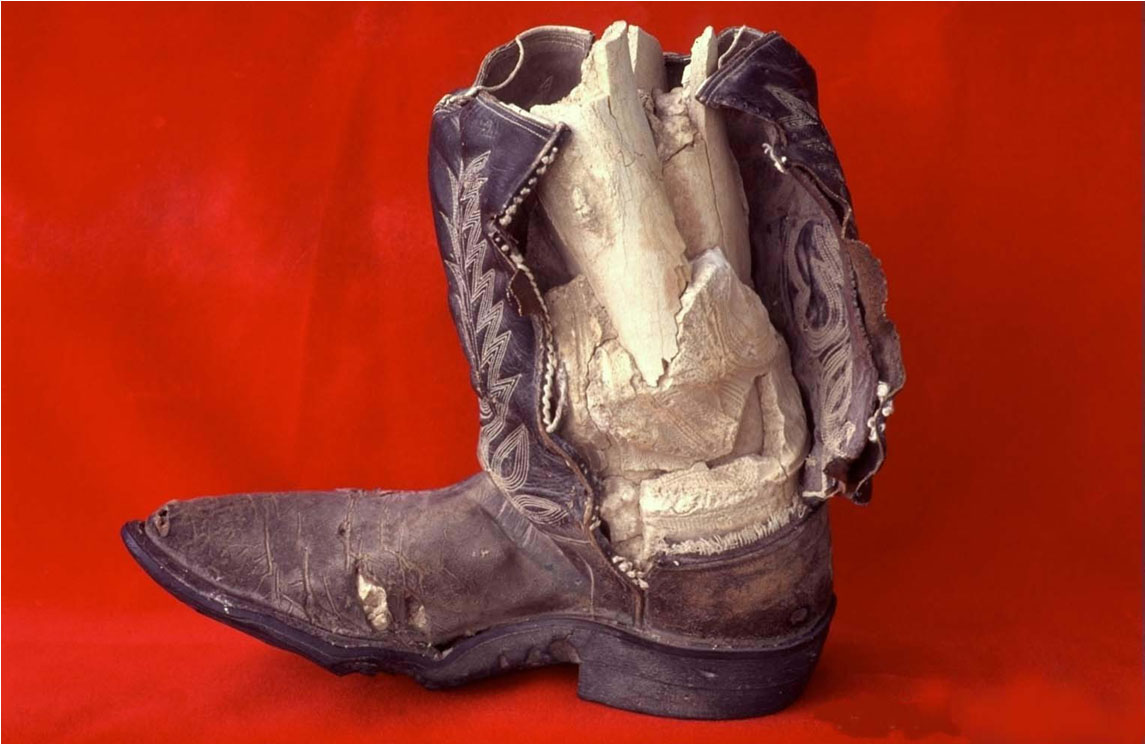
Iron is preserved undamaged in the body as it fossilized. Human beings need to consume an average of 10-15 milligrams a day in order to be healthy. Any excess iron consumed is stored in the liver. In addition, the protein transferrin in blood plasma also carries a certain amount of iron. The reference in the above verse to the presence of iron in the remains of the human body is exceedingly wise from that point of view. ...

The Arabic word “sitran” in verse 90 of Surat al-Kahf means “cover, shelter, curtain or screen.” The term "lam naj`al lahum min duniha sitran" describes an environment devoid of any shelter or protection against the Sun. In the light of present-day knowledge, this is suggestive of the ozone layer that protects living things against harmful solar rays. ...

The one who invites others to Allah is from the closest people to Allah our Lord. In addition, Muslims collectively agree on the importance of propagating Islam and inviting people to Allah, and many talk about it being mandatory upon Muslims, and we agree with them, that it is an obligation, ...

Feeding people in general and a hungry person in particular has been explicitly mentioned in the command of the Messenger of Allah (may Allah exalt his mention). Abu Moosa Al-Ash‘ari (may Allah be pleased with him) reported that the Prophet (may Allah exalt his mention) said: "Feed the hungry, pay a visit to the sick and free the captives." [Saheeh] A reported saying reads, "The best charity is to satisfy a hungry person." Alas, a Muslim may sit at an Iftar table with delicious and tasty dishes ...

His wife noticed a great change in his demeanor. They had several discussions about his work and how it was affecting him and his relationship with Allah Almighty. He agreed, and would begin the process of searching for new work, but inevitably, chose to stay in his current job. He soon found himself feeling very distanced from his wife and children. ...

He took a great interest in the welfare of all people and had great compassion for people in trouble. The Prophet Muhammad imitated the attributes of God par excellence and translated them into practice in the highest form possible for man. Kindness is an attribute of Allah, which has no limits. It is extensive and encompasses all things and all beings without discrimination. ...

Today Data management has become a big industry. However, the invasion of our brain space with cyber space is no small matter: our brain’s storage capacity is limited (roughly 100 billion neurons). For the sake of argument, say that is equivalent to one million giga-bytes of hard disc space. This type of information overload can wreak havoc on the brain. ...

Some say 'actions' here is to be understood in its generality; therefore, nothing is exempt from it. Others relate this as the saying of the majority, meaning the majority of the early scholars. This occurs in the words of Ibn Jarir At-Tabari, Abu Talib Al-Makki, and others from the early scholars. Imam Ahmad said: “I like that for every action, from prayer, fasting or charity or any action of righteousness that there be an intention preceding the action. The Prophet said: ‘actions are by intent ...








 Arabic
 English
 Spanish
 Russian
 Romanian
 korean
 Japanese